

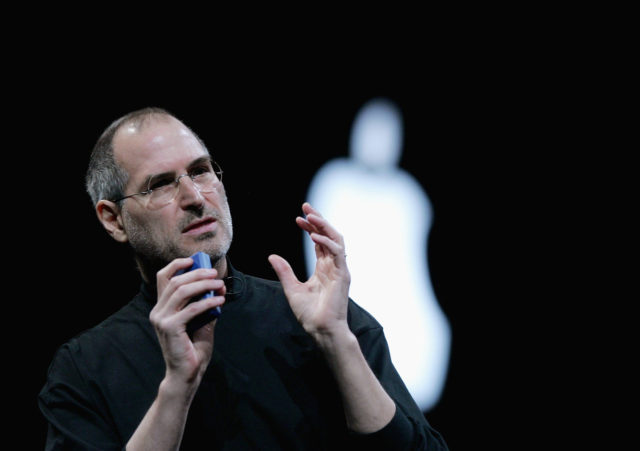
When Steve Jobs died in 2011, the world seemed to stop moving for a while. This was because almost everyone felt connected to him in a way or two, from those making use of MacBook to iPhone, iPad, and many other things he contributed in inventing. Described as one of the greatest inventors to have ever lived, Jobs, in his 56 years changed a lot about technology, so much that years after his death, he is still not forgotten and may never be forgotten.
There are thousands of stories written about him even before he died and thousands more after his death, but all these have not covered all the things there are to say about Jobs.
Why We Will Never Stop Talking About Steve Jobs
1. The Story of His Birth and Adoption
Born on February 24, 1955, it will always be remembered how he was adopted by Paul and Clara Jobs after he was birthed to Abdulfattah Jandali and Joanne Schieble. His father was an Arab Muslim from Syria whose own father was a millionaire. Jandali came to the United States to study and later met Joanne Carole Schieble when he was a doctoral candidate and a teaching assistant for a course Joanne had taken.
The two fell in love but being raised a Catholic, her father would not have his daughter get married to a Muslim. And so when she became pregnant with Steve, Schieble who is of Swiss and German descent, decided to give him up for adoption without involving Jandali or anyone else in the process.
The first family Schieble chose for her Steve later changed their minds opting to go with a girl instead. To her dismay, the couple that adopted him, Paul and Clara Jobs, did not attend college and so she tried stopping them from adopting him because she wanted something better for him. The couple promised to go to college before she allowed them to have him. At first, the Jobs family got scared to love him, thinking he would be taken away, but he later revealed that he was greatly loved by the family and he felt blessed. Steve jobs would later get very upset when Paul and Clara are referred to as his adoptive parents because he saw them as his real parents.
2. Introducing the Era of Personal Computing
Windows computers are more popular today because of their affordability among other things, but the era of personal computing was in fact, introduced by Apple, thanks to Steve Jobs. The target of the Apple founder was to get computers to be available to everyday people, succeeding in a PC revolution.
Growing up with interest in electronics, he got a summer internship at Hewlett-Packard after he called the company’s co-founder a high school student asking for parts for a school project. It was there that he first met Steve Wozniak with whom he would later start his company, Apple.
The two worked on Apple I, which they further worked on into the Apple II, the device that has come to be regarded as the first PC with color graphics and keyboard. This user-friendly device introduced the era of personal computing to the world.
3. Mobile Technology
In 2007 when he introduced the iPhone, Jobs announced that history was being made. True to that, he changed mobile technology forever, while also impacting the telecommunication world in ways never before seen. His invention turned mobile devices into primary communication devices.
His invention forced telecom companies to improve on their services because it was no more only about voice communication. Companies like AT&T, Verizon and Sprint were all forced to invest huge sums of money into digital operations.
Also, his minimalistic approach towards designing mobile devices without keyboards have won today as there are hardly any devices that still come with buttons. This would be replaced by a touchscreen, a technology that he greatly influenced.
4. Creative Capitalism
Beyond transforming the technological world, Steve Jobs has also changed the world of business, alongside others like Bill Gates who have been described as the icons of creative capitalism. His sense of business is a lot more different from that of almost all others before him as he was always ready to create things that the consumers do not know they need. From the PC to iPod, iPhone, and his other long list of inventions, no one would have thought those were things that the consumer would want until they were all created by Steve Jobs.
See Also: What if Someone Steals Your Idea For a Hollywood Movie? Here’s What To Do
5. Together with Other Great Inventors
Above everything else, Steve Jobs will always be talked about in the class of other great inventors that have ever lived including Nikola Telsa, Henry Ford, Thomas Edison, and much more. While there are many that still regard him as the greatest inventor of the century, many more see him as one of the greatest inventors to have ever lived.
